“Mr Nobody against Putin“ and “The Wave” highlight the seductive danger of autocracy, and why we should never assume “it couldn’t happen here”.
“Mr Nobody against Putin” and “The Wave”
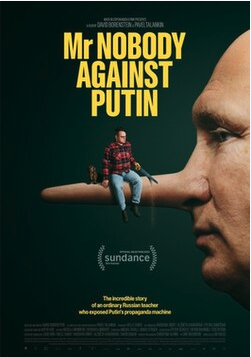
I watched with interest the 2025 documentary Mr Nobody against Putin, about a schoolteacher documenting the brainwashing of children in a Russian primary school. The government-led effort to militarise children, and to encourage them to support the leadership’s aggressive war aims, is chilling. It reminded me of The Wave, a 2008 German film (links in bold italics are to other posts on this site). The Wave explores a key question: could young people in the 21st century still be seduced by authoritarianism?
“Mr Nobody against Putin” and indoctrination
“Mr Nobody against Putin” has been criticised in Ukraine for showing Russian society in a relatively benign light. Rather than resisting Putin’s war of aggression, Russians are depicted as politically apathetic, happy to go along with the war. This reminds me of the group of Russian tourists from St Petersburg I met in Peru last year. When their guide – a Russian living in Peru – asked me what I thought about the war and I said it was a mistake, some of the tourists agreed (‘so many people are dying!’). The majority, however, pressed on, urging the others ‘not to talk about politics’.
In order to create dramatic tension, Mr Nobody against Putin arguably exaggerates the degree of danger the filmmaker, Pavel Talankin, is actually in as a result of his film-making. Elements of the story, such as his “escape” from Russia, feel a bit thin. Where Talankin scores highly is in depicting the sinister manipulation of children to support Putin’s war. This ranges from encouraging children to chant slogans in favour of the war, to wearing military uniforms, and having soldiers visit the school to enthuse the children for handling weapons.
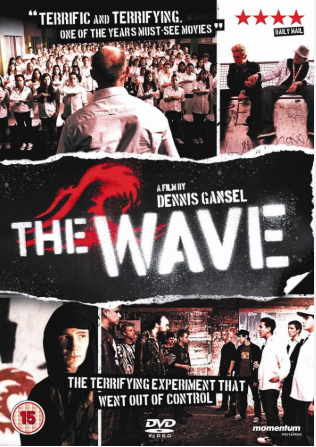
This is deeply disturbing stuff: an attempt consciously to build a generation of young people who are passionately pro-war. In old-speak, brainwashing. It brings to mind the outstanding 2008 German film The Wave. In The Wave, a teacher who is unexpectedly reassigned to teach a politics class to teenagers attempts to convince them that innate human tendencies, such as the urge to belong, and to seek purpose in life, make today’s societies just as prone to authoritarianism as those of 1930s Germany. The students disagree. The teacher begins an experiment, with spectacular results.
The point of this is not to argue that people are intrinsically evil, or that life is hopeless. Rather, it’s to highlight the innate tendencies in all societies – including our own, in the 2020s – to fall prey to indoctrination and authoritarianism if we don’t actively resist this. There are plenty of examples in today’s world, on every continent, of such authoritarianism – you can probably think of a few. Mr Nobody against Putin depicts elegantly, without fuss, some of the nuts and bolts of authoritarianism in action. Could it happen “here”, wherever “here” is? Yes it could.
“Mr Nobody against Putin” and the Russian economy
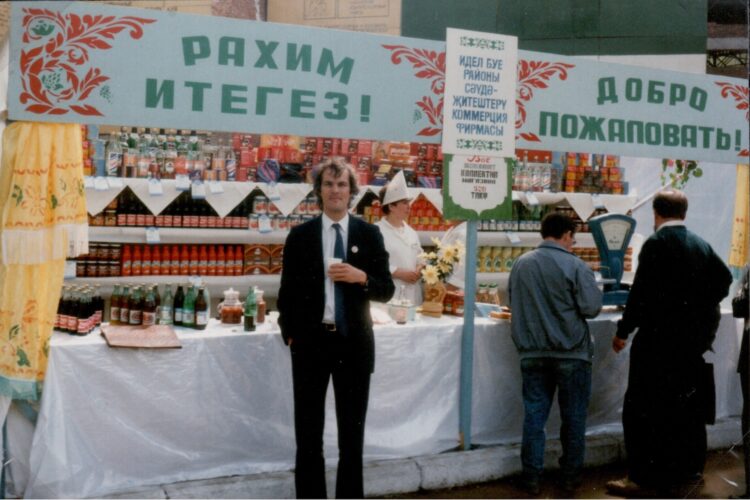
The documentary’s depiction of wider life in Russia is also intriguing. I worked in Moscow as First Secretary (Economic) at the British embassy from 1992-5. I’ve followed Russia’s progress with interest since then. The 1990s were a decade of unparalleled material disaster for Russia and Russians, as for the citizens of most other countries of the former Soviet Union. Living standards collapsed, and chaos replaced earlier certainties.
But whereas some countries of the FSU emerged into the 21st century with fragile or (in a few cases) robust democracies, Russia under President Putin has fallen back into authoritarianism. Putin’s war against Ukraine, from 2014 onwards, has hastened the collapse of democratic institutions. We’ve seen persecution and murder of opposition forces; extermination of independent media; and crushing of freedom of expression.
Monitoring the Russian economy in Kazan, 1994
Against that background, the influence of the economy, and living standards, in keeping President Putin in power is worth studying. Clearly, Putin has established a powerful system of political repression. But a degree of economic growth, and economic predictability, has also played a role in limiting political dissent. In 2025 the World Bank reclassified Russia from “upper-middle-income” to “high-income”, based partly on increased military expenditure. Palau and Bulgaria were promoted, too. Ukraine moved in the same direction, from lower-middle-income to upper-middle-income.
World Bank nominal figures put Russia 67th of 193 countries, with annual GDP per capita of $14,899 (UK $52,637). In terms of purchasing power parity (PPP), designed to take account of what things actually cost, Russia does better. It comes in 45th, at $47,405 (UK $60,620). But as I learned when posted to Moscow in the ’90s, it’s hard to judge how people really live without first-hand evidence. For example, visiting people’s homes as an election observer was revelatory. One of the lessons in my book “Lessons in Diplomacy” is, to understand something, “see it yourself”.
Sadly, I haven’t been to Russia since 2009. I probably won’t do so while British citizens remain at risk of being locked up and held as political hostages. So I hoover up with interest first-hand evidence of what life in Russia is like. In 2013, CCTV and in-car camera images of the Chelyabinsk meteor showed plenty of modern buildings, decent roads and imported cars in a provincial Russian industrial city. Mr Nobody against Putin is similarly instructive. It shows people in Karabash, a modest industrial town coincidentally not far from Chelyabinsk, living lives of reasonable material comfort. I doubt the film-maker, Talankin, has made any attempt to depict Karabash as richer or poorer than it actually is.
Could Russians turn on Putin?
Russia’s vast territory contains extensive energy and other mineral resources. It should be one of the richest countries on earth. So scraping into the World Bank’s high-income category is not a massive achievement. But the fact many Russians live in reasonable comfort helps explain why, despite Putin’s persistent errors of judgement in launching and persisting with a war of annihilation against Ukraine for over twelve years, he has just about managed to keep Russian society quiescent. That doesn’t mean they couldn’t turn on him if the economy deteriorates. Further war disasters or a new wave of mobilisation could stir up discontent, too. But so far, Putin has, just about, kept a lid on it.
The likeliest scenario for President Putin to lose power is probably not a popular uprising. Rather, others in the Russian elite might decide that they have more to gain by deposing him than through loyalty. So far, Putin has successfully kept the lid on this, too.
What to do next
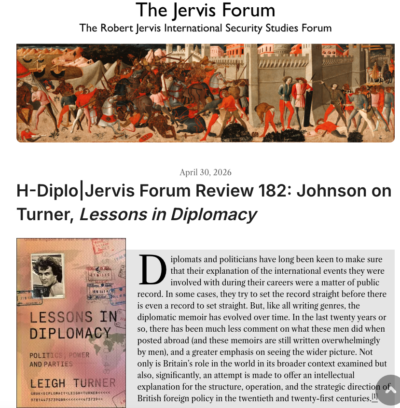
I’ve written extensively about Putin’s war on Ukraine on my website. My 2022 Russia-Ukraine war explainer remains broadly accurate. The website also has a Russia/Ukraine tag. My book “Lessons in Diplomacy: Politics, Power and Parties“, has a chapter called “How to understand Putin’s war on Ukraine”. Comments welcome.