Talks from a life in diplomacy: in what “lessons” are audiences most interested? What’s the best mix of entertainment and insight?
Sixteen talks about diplomacy
Someone asked me recently for a list of my talks, based on my book “Lessons in Diplomacy”. If you’re considering attending, commissioning or avoiding one of my talks, read on.
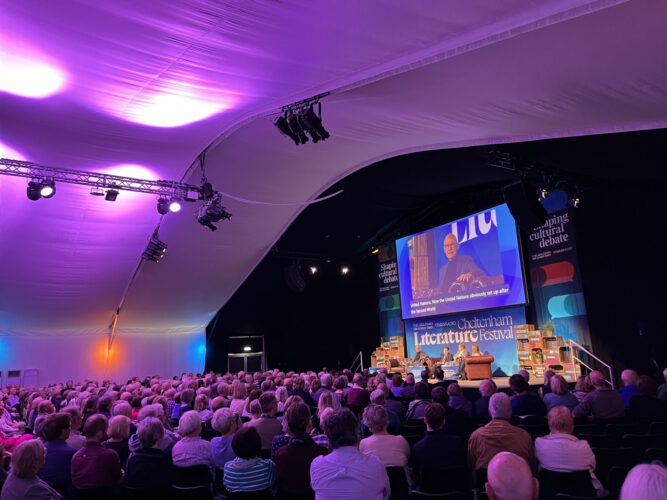
A 2024 discussion on “Kim and Putin: an alliance against the West?” at Cheltenham
Talks: the goal
When I give talks about diplomacy, my goal is to provide both entertainment and insight. Different audiences want different talks. After-dinner speeches are sometimes more light-hearted, and shorter. Some audiences want serious analysis and plenty of factual background. Others want something in-between.

After-dinner speech at the London Diplomacy Ball, 2025, on “Young People and Diplomacy“
Talks: the structure
Usually, talks last from 15-60 minutes with a Q&A session. Questions often start an interesting discussion. People like a chance to say “I often wondered about…”
For one-off talks, I often start with an introductory section called How to become an ambassador. It’s a run through the highs and, yes, lows of my career, richly illustrated with stories. It can last anything from 10-40 minutes. My career wasn’t spectacular by diplomatic standards. But audiences are often interested to hear how you become a diplomat, what ambassadors do all day, and how to get invited to the King’s Birthday Party – or not.
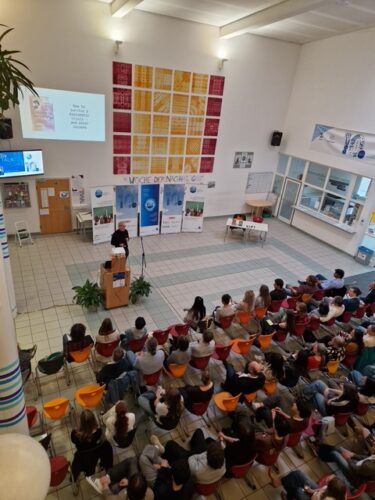
“How to survive a diplomatic crisis” at the Salzburg International School, 2026
I often combine How to become an ambassador with one or two of 16 modules about different aspects of diplomacy. They’re loosely based on my book Lessons in Diplomacy: Politics, Power and Parties (Bristol University Press, 2024). Modules 1-9 set out practical or corporate lessons that individuals and organisations can draw from diplomacy. Modules 10-16 are focused on specific aspects of foreign policy and diplomatic practice. All are full of colourful and memorable examples. I give talks in English or in German, as one-off presentations or as a series.
The modules – 16 aspects of diplomacy
The modules, or talk elements, are as follows.
1. Crisis management: Diplomatic lessons in how to survive a crisis.
- What happens, literally, when a bomb goes off? The importance of muscle memory and “training, training and training”.
- When it’s sometimes best to do nothing. There’s always an urge to “do something” in a crisis, but this isn’t always right.
- Leading teams and putting your own oxygen mask on first.

Laying flowers after the 2016 Ankara bombing
2. Understanding diplomatic tradecraft and why it matters.
- What is diplomatic immunity and why is it important? Examples of misuse.
- Cocktail parties, networking, and when lobbying really happens.
- Why diplomatic etiquette matters.
- When diplomats dissemble: never expect a straight answer from a diplomat to the question: “What’s your favourite posting?”
- Living with surveillance.
3. Lifelong learning and how to enjoy it.
- If lifelong learning sounds dull, you’re not doing it right.
- How languages can change your life, and how to learn them (it’s not true that “you can’t”).
- How reading foreign writers can illustrate censorship – and show how well you would cope with a dictatorship.
- Why you should “see it yourself” to gain knowledge and wisdom.
- How to get better at public speaking.
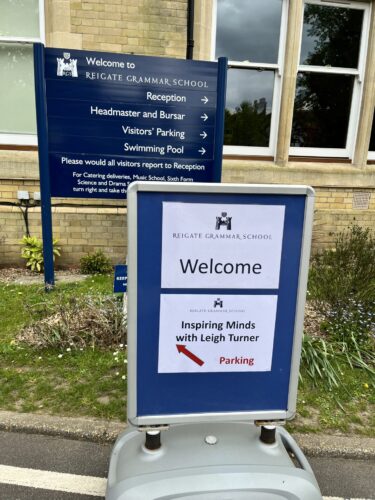
I often give talks at schools. I liked this notice
4. Networking and contact-making: How to know people.
- Why the art of knowing people is vital to diplomacy – and life in general.
- Knowing Russians: meeting Satan and Pushkin in 1992 Moscow.
- Knowing the right people: How we rescued young Britons during COVID.
- Lessons in breaking the ice, from the military and the police.
- Body language: when to be careful!
5. Proactivity, planning and how to craft a career.
- Be proactive: how clear planning can help you get the jobs you want – even if you miss out on Eswatini and Argentina.
- Different approaches to recruitment and promotion.
- Analyse big decisions methodically for reassurance and to avoid FOMO.
- Delegation: the toughest lesson, from a former submarine commander.
- Be ready to do anything. Ever been asked to shovel potentially radioactive earth into a diplomatic bag?
6. Interview skills and resisting pressure: How to be interrogated
- Know your message: lessons from Vladivostok. “Use the sandpit” to practice.
- How every interview is a 2-way street.
- When to resist unreasonable demands: what Ted Heath taught me.
- When to ignore advice. Sometimes, it’s good not to do what you’re told.
- How can you work for those people? Integrity, politics and clothing.

With Roger Glover and Steve Morse of Deep Purple, 2017
7. Humility and dignity: How to keep your feet on the ground.
- How to stay grounded: Lessons from Deep Purple and British politicians.
- When to admit you’re wrong. Three big diplomatic misjudgements.
- The importance of recognising your own prejudices and chauvinism.
- Why you shouldn’t fall into the expat trap of thinking your own country is more hopeless than it is.
8. Structures, consensus and upward management: How to handle politicians.
- 1987-89 and Brexit. Meeting Margaret Thatcher, Geoffrey Howe and – unexpectedly – John Major.
- Vienna 2016: how split was the British Government on Brexit?
- Prime Minister Theresa May and President Macron: the challenges of negotiating without unity.
9. Diversity, leadership and change.
- What diplomacy can teach us about supporting diversity – often against subconscious bias, inertia and entrenched interests.
- A husband-and-wife job swap.
- How women fought prejudice to enter the British Diplomatic service.
- The importance of male allies.
- Problems of diversity in organisations operating internationally.
- Positive actions in the Foreign Office to increase the role of women in diplomacy.
- Diversity and change: the job is never done.

I recommend this 2018 paper by the FCO Historians
10. How to be a good ambassador.
- When size matters: the competition of the “Great Powers” to have the biggest embassy buildings.
- Why a big residence – or any piece of infrastructure – can be like an airport security arch. Invaluable, or useless.
- How to be the big man or woman in town – and why it matters.
- How the 1875 British residence in Vienna survived World War 2 and beyond.
- How to be invited to a King’s Birthday Party.
11. How to tackle terrorism.
- Understanding the motivation of terrorists. Algeria in the 1950s, Semtex in the 1980s.
- Knowing your enemies: known and unknown unknowns.
- Don’t overestimate your opponents. Saddam Hussein and the Iraq hostages, 1991.
- Why risk comes with the job in diplomacy. Often, risky places are where you want to be.
12. How to fail at geopolitical change: Brexit.
- How the seeds of Brexit were sown in the 1980s: Thatcher and a very British civil war.
- How no-one in the UK establishment made the case for the EU 1987-2016.
- Why the UK voted as it did on 23 June 2016.
- The question – or problem – of “European Values”.
- The perils of the UK’s appetite for risk: “It’ll be all right on the night”.
- The impact of Brexit in Vienna and the rest of Austria, 2016-21.

With Foreign Secretary Boris Johnson in Vienna in 2016
13. How not to introduce democracy: Russia and China.
- How the Iron Curtain rusted: Austria 1985-89 and opening the Hungarian border.
- Perestroika and Glasnost in action in Vienna, 1985-1987.
- Democracy, “shock therapy” in Russia (1991-2000) and Putin.
- The handover of Hong Kong in 1997 and Chinese fears of instability. Russia’s experience of reform and China.
14. How to understand Putin’s War on Ukraine.
- The Ukrainian independence referendum of 1991 and the collapse of the Soviet Union.
- How Russia seeks to justify its invasions of Ukraine in 2014 and 2022.
- The Bolotnaya protests and why President Putin fears democracy in Ukraine.
- What Putin doesn’t understand about Ukraine – or the rest of the former Soviet Union.
15. Why doesn’t someone do something? The logic of armed intervention.
- Why do western powers intervene in some places but not in others? Some examples.
- Is there a secret plan? Is it oil? Is it something else?
- A stew of factors: politics, chance, national interest, principle and do-ability.
- Until recently, interventions were becoming, mercifully, fewer. Putin and Trump risk changing everything.

Hantavirus: emergency airdrop on Tristan da Cunha, 2026
16. How to grapple with a legacy of colonialism: The Overseas Territories.
- The UK Overseas Territories. Where they are, what they want, why they’re still there.
- Why the Overseas Territories want maximum independence from the UK – without becoming independent.
- The Overseas Territories and London: conflict pre-programmed.
- The benefits of working on the OTs – “How do you get a job like that?”
What to do next
If you’d like me to give a talk, do get in touch. If you’d like to learn the gist of the talks without actually sitting through one, that’s easy, too! Just have a look at my book Lessons in Diplomacy: Politics, Power and Parties. You can read about my fiction writing here.